
Do You Need a Whole-Home Generator? A Georgia Homeowner's Guide Before Hurricane Season Peaks
Written by Zach Young, Owner of SurePoint Electric, a licensed electrical contractor serving Hiram, Dallas, Douglasville, Villa Rica, and the greater Paulding County area since 2023. Last updated August 20, 2026.
Do You Need a Whole-Home Generator? A Georgia Homeowner's Guide Before Hurricane Season Peaks
Quick answer: Late August through October is peak Atlantic hurricane season, and Georgia regularly sees tropical storm remnants and severe thunderstorms that cause multi-day power outages. A portable generator with a manual transfer switch is a lower-cost option for covering essentials, while a standby generator installed by a licensed electrician provides automatic, whole-home backup power. Sizing and cost depend on how much of your home you want to keep running.
Georgia isn't a coastal state, but that doesn't mean hurricane season passes us by. Every year, tropical storms and hurricane remnants track inland through the state, and combined with the severe summer thunderstorms that are already common here, Paulding County homeowners can lose power for hours or, in the worst cases, several days.
We get a wave of generator calls every August and September, almost always right after a storm has already knocked someone's power out. It's an understandable pattern. Nobody thinks about backup power until the lights actually go off. But that also means most people end up making a rushed decision during the worst possible week to make one, when installers are booked solid and units are harder to come by. If you're thinking about backup power before that happens rather than after, here's what to actually consider.
Why This Matters More in Late Summer
According to the National Hurricane Center, the Atlantic hurricane season runs June 1 through November 30, with activity typically peaking from mid-August through October. This isn't a theoretical risk for Georgia. When Tropical Storm Helene moved through the state in September 2024, more than one million Georgia Power and EMC customers lost power statewide, with outages in some areas lasting for days. That storm never made landfall as a hurricane in Georgia. It was already weakening by the time it crossed into the state, and it still knocked out power to well over a million homes and businesses.
Between mature trees, overhead power lines, and the sheer number of storms moving through Georgia during peak season, outages aren't rare. A downed line can take a neighborhood offline for a day. A larger storm can leave an area without power for the better part of a week. Refrigerated food spoils, sump pumps stop running during heavy rain, and homes with electric heat or well water lose those systems entirely.
Portable vs. Standby Generators
Portable Generator
- Startup: Manual, you set it up and start it
- Fuel: Gasoline, needs refueling
- Coverage: A few essential circuits
- Typical installed cost: $1,500–$4,000
- Best for: Occasional short outages, tighter budgets
Standby Generator
- Startup: Automatic, starts within seconds of an outage
- Fuel: Natural gas or propane, continuous supply
- Coverage: Partial home to full whole-home coverage
- Typical installed cost: $8,000–$15,000+
- Best for: Frequent or extended outages, full home comfort
How to Size a Generator for Your Home
- List your essential circuits. Refrigerator, sump pump, a few lights, HVAC, medical equipment, well pump, and anything else you can't do without.
- Add up the wattage. Combine running watts for everything on your list, then add the highest single startup wattage on top, since motors like AC compressors and well pumps briefly draw extra power when they start.
- Decide on coverage level. A partial-home unit (10–14 kW) typically covers essentials plus one AC zone. A whole-home unit (20–26 kW or larger) covers full central air and every circuit in the house.
- Get a professional load calculation. A licensed electrician will size the generator and transfer switch to your specific panel and home rather than relying on rough estimates.
What Installation Actually Involves
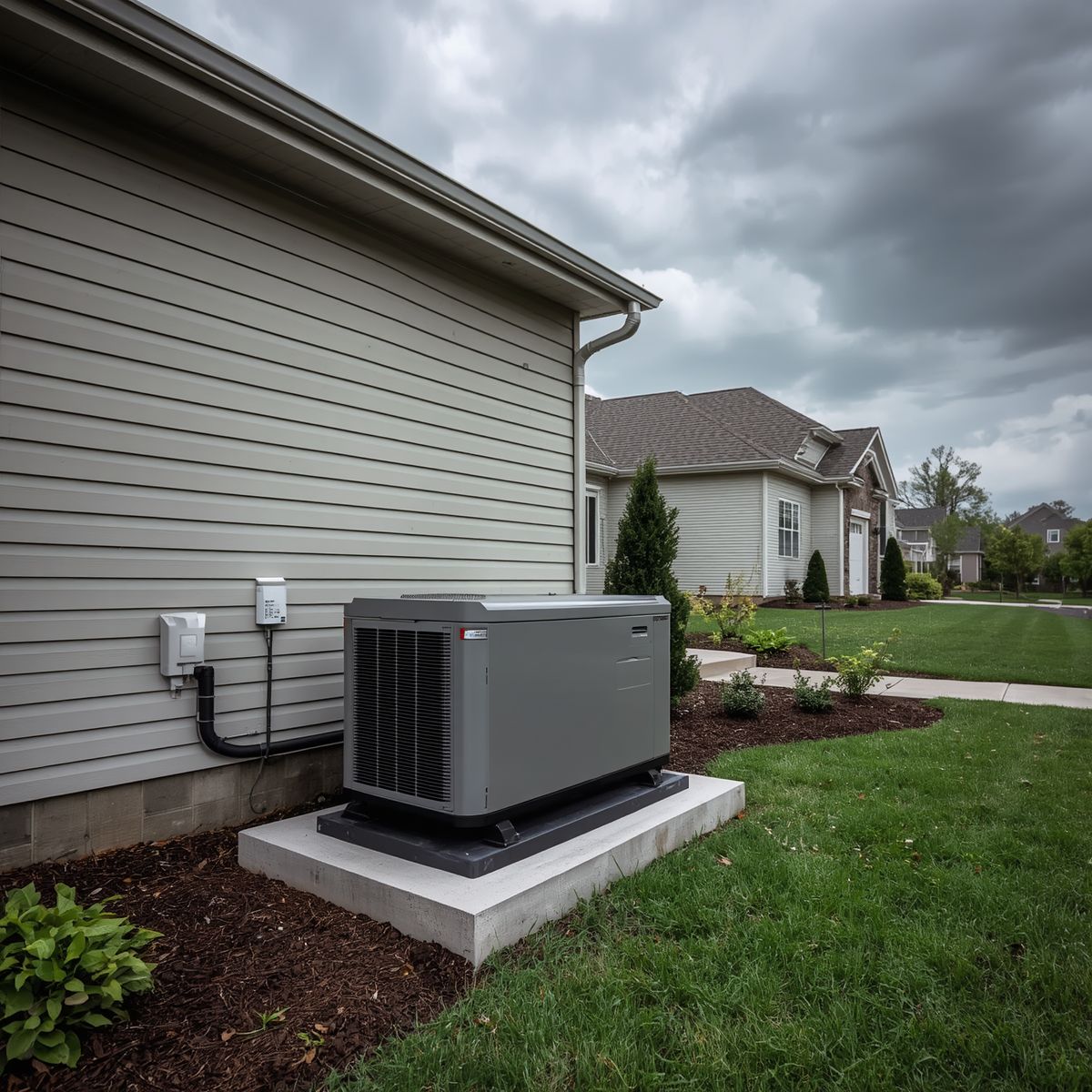
A standby generator installation includes the generator unit itself, an automatic transfer switch that safely disconnects your home from the grid during an outage, a gas line connection, and a concrete or composite pad for the unit to sit on outside the home. Permits and a utility company inspection are required. Once approved, physical installation typically takes one to two days, though the full process from quote to final inspection usually runs two to four weeks depending on local permit turnaround.
Don't Forget About Maintenance
A standby generator isn't a one-and-done purchase. Most units run a brief self-test every week or two automatically, cycling the engine for a few minutes to make sure it starts on demand, which is part of why you shouldn't be surprised to hear it briefly kick on even when there's no outage. Beyond that, manufacturers generally recommend a professional service visit once a year to check the oil, battery, air filter, and overall function, similar in spirit to servicing a car engine. Skipping this is one of the most common reasons a generator fails to start during the one outage it was bought for. Budgeting roughly 150 to 400 dollars a year for maintenance is reasonable for most residential standby units.
Frequently Asked Questions
Can I install a generator myself?
Portable generators can be used with a manual transfer switch installed by a licensed electrician, but connecting a generator directly to household wiring without one is dangerous and illegal in most areas, since it can send power back into utility lines and injure repair crews. Standby generator installation involves gas line work, electrical permits, and utility coordination, and should always be done by a licensed professional.
Does Georgia really get enough storms to justify a generator?
Yes. While Georgia isn't on the coast, tropical storms and hurricane remnants regularly move inland through the state, and severe summer thunderstorms are common the rest of the year. Both can knock out power for hours to several days, particularly in areas with mature trees and overhead power lines, which describes much of Paulding County.
How long does a standby generator installation take?
Once permits are approved, physical installation typically takes one to two days. The full timeline from initial quote to final inspection, including permitting and any necessary gas line or panel work, usually runs two to four weeks depending on local permit office turnaround.
Don't Wait for the Next Outage
SurePoint Electric proudly serves homeowners in Hiram, Dallas, Douglasville, Villa Rica, and the surrounding Paulding County area. If you've been thinking about backup power, now, before hurricane season peaks, is the time to get a load calculation and a real quote rather than scrambling after the next storm takes your power out. Book a free estimate today.
About the author: Zach Young is the owner of SurePoint Electric, a licensed electrical contractor serving Hiram, Dallas, Douglasville, Villa Rica, and the greater Paulding County area since 2023. Zach and his team handle everything from panel upgrades and generator installs to everyday electrical repairs for homeowners across the region.