
The True Cost of Level 2 EV Charger Installation in Northwest Atlanta
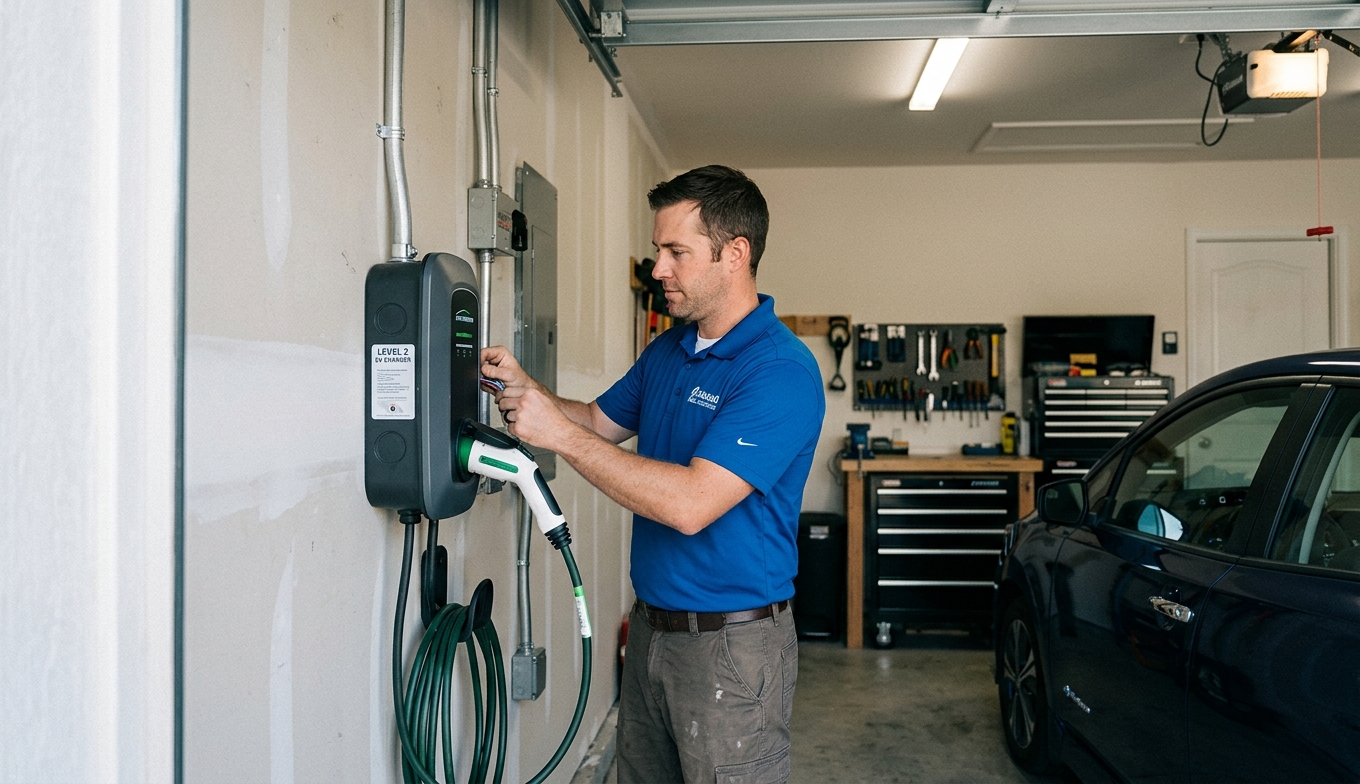
You just brought home a new electric vehicle. Then you plug it into the standard wall outlet in your garage, and the dashboard tells you it will take three days to reach a full charge. Relying on a standard 120-volt outlet, known as Level 1 charging, simply does not work for daily driving.
To wake up to a full battery every morning, you need a Level 2 charging station. But what does it actually cost to get one installed safely in Northwest Atlanta?
When homeowners start exploring the cost of upgrading to a whole-home electrical solution, the numbers can feel overwhelming but that’s where SurePoint Electric comes in.
With 15 years of hands-on experience serving homeowners in Hiram, Dallas, and surrounding communities, our team breaks down the real costs, key variables, and exactly what you can expect based on your home’s unique needs. We deliver honest, expert guidance and tailored solutions designed to help you invest with confidence, right here in your neighborhood.
Breaking Down the Base Installation Costs
For a standard Level 2 EV charger installation, most homeowners in Paulding and Cobb counties spend between $600 and $1,200. This price covers the labor, the new 240-volt circuit, and the heavy-duty wiring. It assumes your electrical panel is located in the garage right next to where you want the charger.
The actual charging unit, the Electric Vehicle Supply Equipment (EVSE), is usually purchased separately.
Reliable models from brands like ChargePoint, Tesla, or JuiceBox range from $400 to $700. When you combine the hardware and the professional installation, your baseline investment starts around $1,000 to $1,900.
Do I Need an Electrical Panel Upgrade for a Level 2 Charger?
A Level 2 charger draws a lot of continuous power. We typically install a dedicated 50-amp or 60-amp breaker to handle the load. If you live in a newer home with a 200-amp electrical panel, you likely have plenty of room.
However, if your home runs on an older 100-amp or 150-amp service, adding an EV charger might overload your system. Upgrading your entire electrical panel (often called a "heavy up") can add $2,000 to $3,500 to your project.
A Smart Alternative: Load Management Devices
Here is a cost-saving alternative most people miss. If your panel is full, we do not always have to replace it.
We can install a smart load management device, like a SimpleSwitch. This module monitors your home’s power draw and automatically pauses your EV charging while heavy appliances, like your HVAC or oven, are running. It saves you thousands on a panel upgrade while keeping your home perfectly safe.
Hardwired vs. Plug-In Chargers: Which is Cheaper to Install?
Many homeowners assume buying a plug-in charger and having an electrician install a 240-volt outlet (a NEMA 14-50 receptacle) is the cheapest route. A few years ago, that was true. Today, recent electrical code updates have changed the math entirely.
The current electrical code requires all new 240-volt garage receptacles to use GFCI (Ground Fault Circuit Interrupter) breakers. These specialized breakers cost well over $100. Worse, EV chargers already have built-in ground fault protection. Plugging a protected charger into a protected GFCI outlet often causes "nuisance tripping," leaving you with a dead car battery in the morning.
The solution is hardwiring. When we hardwire the charger directly into your electrical system, we bypass the need for an expensive GFCI breaker and a heavy-duty receptacle. Hardwiring provides a safer, more reliable connection, allows for faster charging speeds, and often costs less in parts.
Hidden Costs: Distance and Drywall
The biggest variable in your installation quote is the distance between your electrical panel and your parking spot. Thick, copper wiring rated for 60 amps is expensive. If your panel is in the garage, the wire run is short and cheap.
If you live in a Hiram home with a finished basement and the panel is downstairs, running conduit up to the garage takes significantly more time and material. We often have to navigate finished ceilings or exterior walls. Expect the total cost to rise by $300 to $800 if we have to fish wire through complex areas to reach your garage.
How Much Do Electrical Permits Cost in NW Atlanta?
Pulling a permit is not optional for a 240-volt circuit installation. It protects your home, your family, and your homeowner's insurance policy. Local municipalities require a permit to ensure the wire gauge matches the breaker size and can handle continuous EV loads without overheating.
In Paulding County and the city limits of Hiram or Dallas, residential electrical permits usually cost between $50 and $100. A reputable electrician handles this paperwork for you and schedules the final inspection with the county.
Can Local Rebates Lower My Installation Cost?
Absolutely. You should never pay full price if you do not have to. While federal tax credits for EV chargers change frequently, local utility incentives offer reliable savings.
Georgia Power frequently offers rebates for residential customers who install Level 2 chargers. You can also switch to their specific Plug-In Electric Vehicle (PEV) rate plan. By programming your new charger to run only between 11:00 PM and 7:00 AM, you pay practically pennies per kilowatt-hour. The savings on your monthly power bill will easily pay for the installation cost within the first year or two.
Ready to wake up to a fully charged car every morning?
Skip the guesswork and the hidden fees. Contact our team today for a transparent, no-obligation quote on your Level 2 EV charger installation in Hiram, Dallas, or anywhere in Northwest Atlanta. Let's get your home wired safely so you can get back on the road!